

Off-grid solar hot water that doesn't drain your battery
On an off-grid property, hot water is often the biggest single load on your battery and inverter. A standard electric element can pull up to 3.6 kW for hours, and a heat pump adds a compressor that starts and stops through the day. iHot takes hot water off your battery entirely by running your tank from its own dedicated solar panels.
How iHot works off-grid
iHot is a standalone solar water heating inverter. A dedicated set of solar panels connects straight to the iHot unit, which feeds that power into the heating element of a standard electric storage tank. It isn't connected to your house solar, your battery or your main inverter, so it uses none of their capacity.
- Zero load on your house battery. Your stored energy stays available for lights, fridges, pumps and tools.
- No extra strain on your main inverter. There's no 3.6 kW element or heat pump compressor drawing through it.
- Generator boost. For long cloudy spells, iHot's grid input can take power from a generator instead to top up the tank.
- Your tank is your thermal battery. Hot water heated in the middle of the day stays hot in an insulated tank for use that evening and the next morning.
What hot water costs an off-grid system
A 4-person home uses about 8 kWh of heat a day for hot water. Off-grid, that energy has to come from somewhere:
| How the tank is heated | What it takes from your system each day |
|---|---|
| Electric element from your house battery | About 8 to 9 kWh including inverter losses. That's most of the usable capacity of a typical 10 to 15 kWh off-grid battery. |
| Heat pump from your house battery | About 2 to 3 kWh, plus compressor start-up surges, often in the evening or early morning when the battery is already working hardest. |
| Electric element from a diesel generator | About 2.5 to 3 litres of diesel a day. At $2 a litre, that's roughly $1,800 to $2,300 a year in fuel, plus generator hours and servicing. |
| iHot from its own dedicated panels | Nothing from your battery or main inverter. The generator is only needed as a backup in long cloudy spells. |
Assumes 8 kWh of heat a day, about 90% inverter efficiency, a heat pump delivering about 3.5 kWh of heat per kWh of electricity, and a well-loaded diesel generator producing about 2.5 to 3.5 kWh per litre. Your figures will depend on your household, tank and equipment.
Real off-grid installs
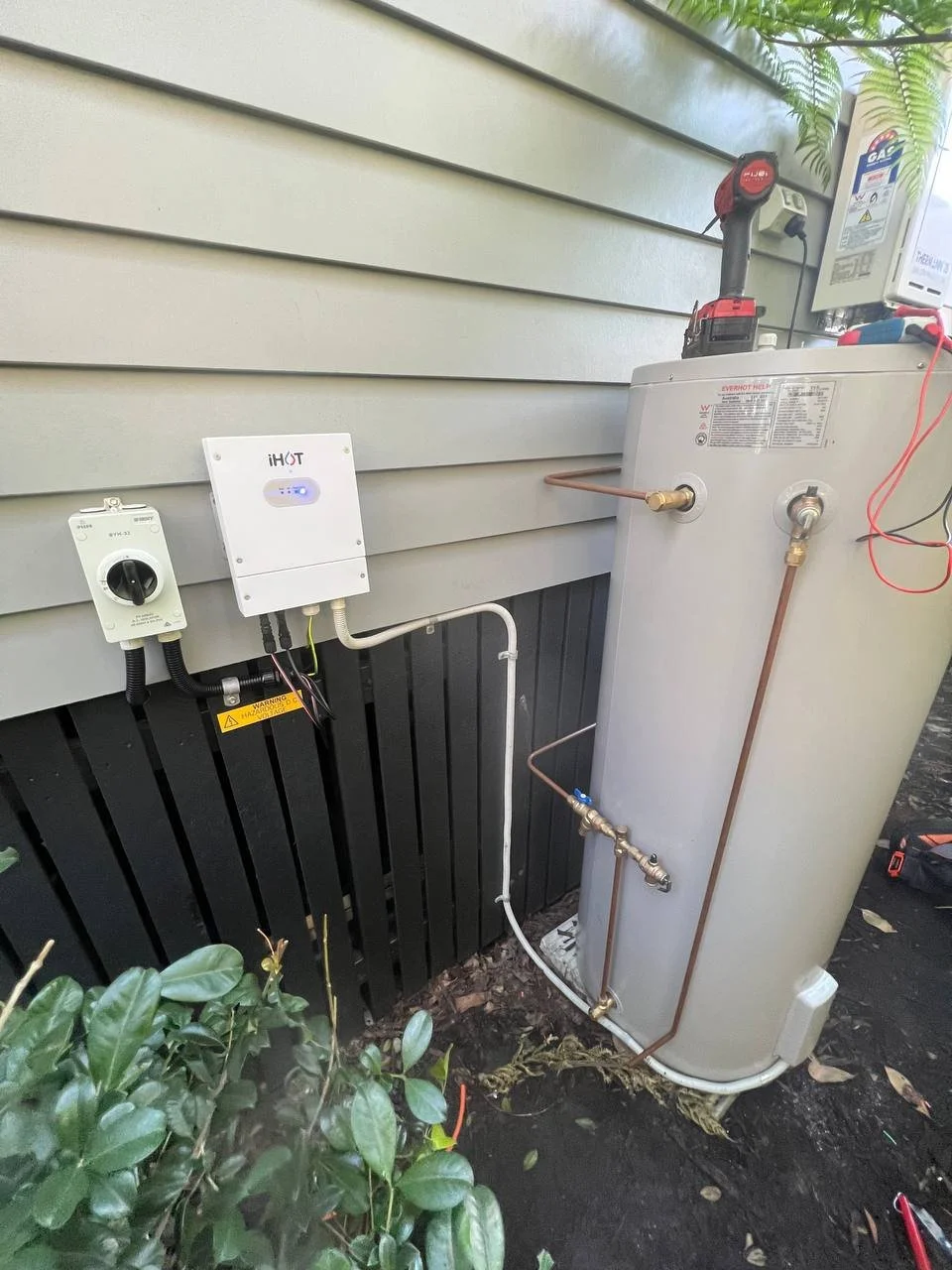
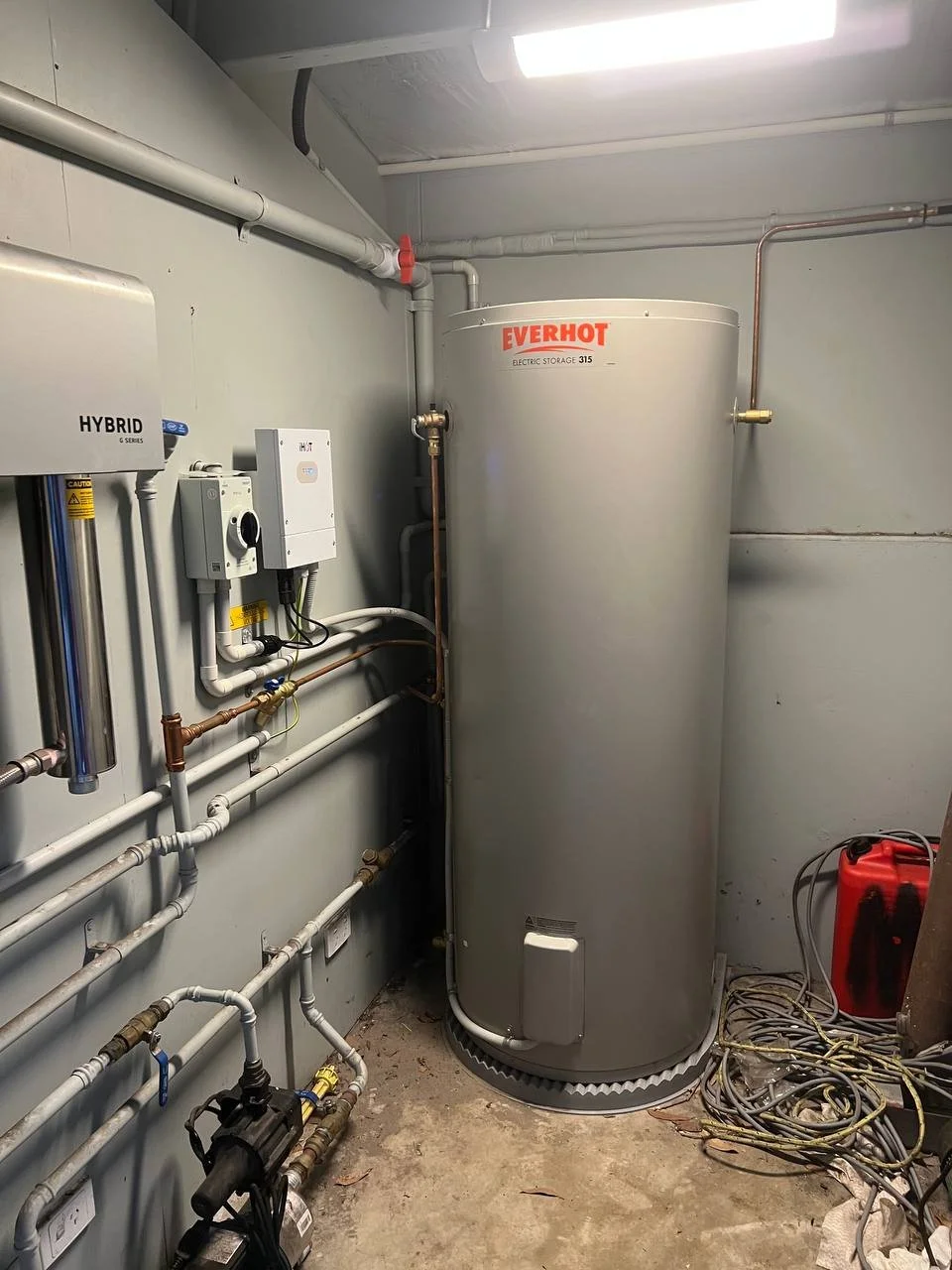
What owners say
“Where do I start, one of the greatest purchases for remote off grid use. Our house is hooked up to our 400 liter hot water system provides endless hot water for our use with up to 20 people including 14 grandkids staying at Xmas time.”
“Straight forward instillation, had hot water in 2 days from set up on cloudy days, perfect for off grid.”
“With cyclone we just had, we had 4 days without electricity. Our ihot continued to work during the rainy weather. 5 stars - It's an awesome system!”
Read all iHot reviews on Google
Case study: hot water for 20 people on an off-grid island
The home: an off-grid island home in South East Queensland.
The challenge: enough hot water for a full house at Christmas, up to 20 people including 14 grandkids, with no grid to fall back on.
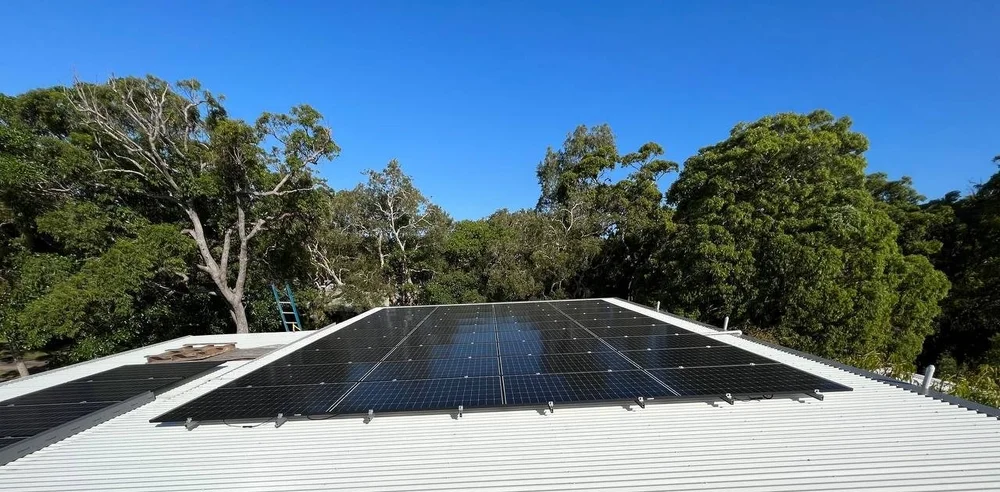
The setup: iHot running a 400 litre electric storage tank from 8 dedicated 440 W solar panels (about 3.5 kW). Eight panels is iHot's recommended maximum, and the large tank acts as a thermal battery, storing the day's solar heat for evening and morning showers.
The result: in the owner's words, “endless hot water for our use with up to 20 people.” She calls iHot “one of the greatest purchases for remote off grid use.”
The lesson: off-grid, tank size matters as much as panel count. A bigger, well-insulated tank lets one sunny day cover a crowded house through the evening and into the next morning.
Who uses iHot off-grid
- Remote homes, farms and stations. Hot water without adding load to the house battery or running the generator every day. Farms and stations
- Island and coastal homes. No roof tank to lift into place, and a solid-state, IP68-rated unit with no compressor or fan to corrode.
- Weekenders, cabins and holiday shacks. The tank is hot when you arrive, with no gas bottles to swap and nothing to start. Cabins and holiday homes
- Granny flats, tiny homes and second dwellings. A separate hot water supply that doesn't need a bigger battery or inverter. Tiny homes and granny flats
- Farm quarters, sheds and work camps. Showers and wash-down water heated from a few panels on the shed roof or a ground frame.
- Glamping and eco-tourism. Silent hot water for guests, from the sun, with no generator running at night.
Why not a heat pump off-grid?
Heat pumps are very efficient, and on some off-grid systems with a large battery and plenty of spare solar they can work well. The trade-off is that a heat pump runs through your house battery and inverter, often in the evening or early morning when your battery is already working hardest. iHot keeps hot water on its own separate supply, so it never competes with the rest of the house.
Sizing an off-grid system for winter
Off-grid, size for the shortest, cloudiest days, not the average. As a starting point at Brisbane's latitude with north-facing panels:
- Panels: 4 to 6 dedicated panels for 2 people, 6 to 8 for 4 people, and 8 (the recommended maximum) for 6 people. Off-grid homes without grid boost should plan for the upper end.
- Tilt: on a ground frame or adjustable mount, tilting the panels more steeply than usual (roughly your latitude plus 10 to 15 degrees) favours the low winter sun.
- Tank size: the tank is your thermal battery. A larger, well-insulated tank (for example 315 to 400 litres for a family) carries more hot water through a cloudy day or two.
- Location: cooler southern areas and the tropics in the wet season need more margin. Your installer will size the system for your site.
iHot accepts up to 350 VDC and 20 A, so it suits almost all residential solar panels. Your installer will check the string voltage stays under 350 V on the coldest mornings.
Installing iHot on a remote property
- Panels where they work best. The dedicated panels can go on the house roof, a shed or carport roof, or a ground-mounted frame near the tank.
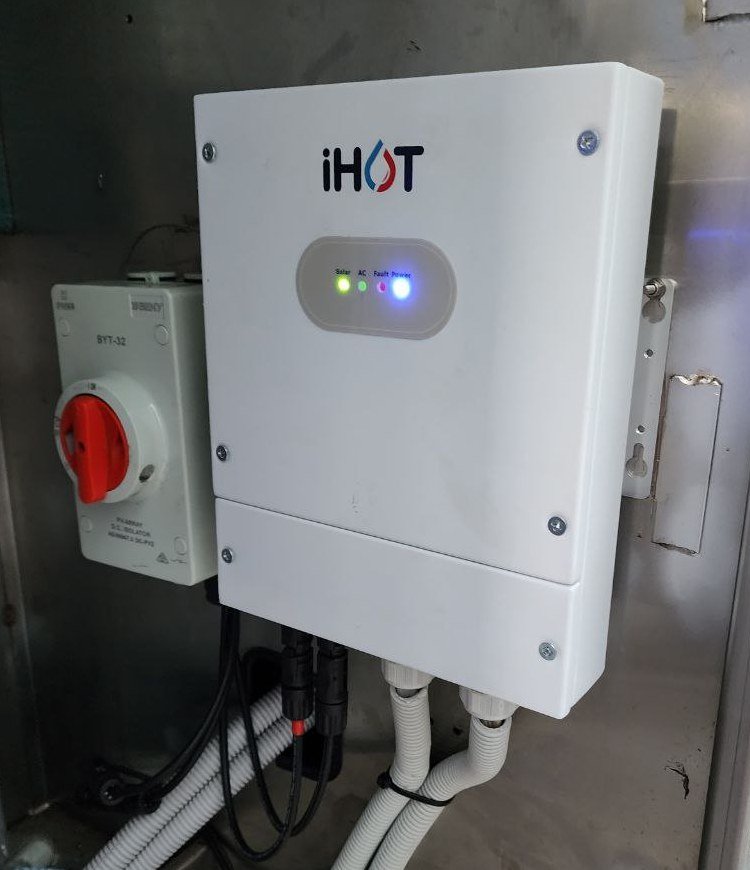
- Light and simple. No heavy roof tank and no plumbing to the roof. The iHot unit mounts on the wall beside your tank.
- Keeps your existing tank. If you already have a standard electric storage tank in good condition, it stays.
- Kits for remote delivery. Our solar hot water kits include the iHot unit and 6 or 8 LONGi 475 W panels, with rails, cable and isolator in the complete kit. Freight is quoted to your address, or pick up from our Wynnum warehouse.
- Installed by a qualified electrician. A licensed electrician must install and connect the system. An accredited installer can also claim the STCs for you.
Backup for long cloudy spells
In a run of heavy cloud, iHot still makes some heat, but it may not reach full temperature. For those days:
- Generator boost. iHot's generator input is the same as its grid input. With a generator connected, whenever it's running and the tank's thermostat switches on, the element heats from generator power. You run the generator only when you need it, and a run you're already doing for other loads can top up the hot water too.
- Plan your use. A well-insulated tank heated on a sunny day keeps water hot for the evening and the next morning.
- Size with margin. More panels (up to 8) and a larger tank mean fewer days needing backup.
Grid-connected homes at their solar limit
The same design helps on the grid. Because iHot's panels never export, they aren't affected by your network's rooftop solar or export limits. If your house system is already at its cap, you can still add solar hot water with iHot.
Honest limits
- It needs roof space. 6 to 8 panels for a typical family, in addition to your house solar.
- Winter and cloudy weather. Weaker sun means less solar heat. Plan a backup, such as generator input, for extended cloudy periods.
- Electric tank required. iHot runs a resistive element. It can also be fitted to many solar hot water and heat pump tanks via their backup element, at your installer's discretion.
Cost, rebates and warranty
A typical installed system with 6 to 8 dedicated panels costs around $2,000 to $3,000 after the STC discount, when you keep your existing electric tank. The dedicated panels earn federal STCs worth about $800 to $1,000, and iHot may also be eligible under some state programs; check with your installer. The iHot unit is solid-state, IP68 rated and comes with a 5-year warranty.
Off-grid questions
Does iHot connect to my off-grid battery or inverter?
No. iHot runs from its own dedicated panels straight into your tank's element. It doesn't matter what battery voltage or inverter brand you have, because iHot doesn't connect to them.
Can I use the panels I already have?
Not your house system's panels. iHot needs its own dedicated panels. You can add new panels, or your installer may be able to use spare panels that aren't connected to anything else.
Will I have hot water in a week of rain?
iHot keeps producing some heat on cloudy days, and owners have reported hot water through cyclones and wet weather. For long spells, plan a generator boost.
How does generator boost work?
iHot's generator input is the same as its grid input. A qualified electrician connects your generator to it. When the generator is running and the standard tank's thermostat switches on, the element heats from generator power, just as it would from the grid.
Do I need a new tank?
Not if you have a standard electric storage tank in good condition. iHot can also be fitted to many solar and heat pump tanks via their backup element, at your installer's discretion. It isn't compatible with gas-only systems.
Is there any noise?
No. iHot is solid-state, with no compressor or fan.
Talk to us about your off-grid setup
Tell us your location, household size, current tank and how your power system is set up. We'll send you a price and tell you honestly whether iHot suits your property.
Get an installed price
Contact us · Find an installer · Heat pump vs iHot · Cheapest way to heat water · How iHot works